
Aridax Journal of Social Sciences & Humanities
Aridax Journal of Social Sciences & Humanities (AJSSH) is a peer-reviewed, international journal dedicated to publishing original research, review articles, and critical scholarship that advance understanding of human society, culture, behavior, and thought. The journal provides a credible and inclusive platform for academicians, researchers, scholars, and practitioners across the social sciences and humanities to disseminate rigorous, well-substantiated work that contributes to academic discourse and informs policy and practice. AJSSH welcomes contributions from a wide range of disciplines, including but not limited to sociology, psychology, political science, economics, education, law, history, philosophy, linguistics, literature, anthropology, gender studies, media and communication studies, and cultural studies. The journal particularly encourages interdisciplinary and comparative research that examines contemporary social issues, historical developments, and the evolving human experience within local, national, and global contexts. Every manuscript submitted to AJSSH undergoes a thorough double-blind peer review process to ensure academic rigor, originality, and ethical integrity. The journal is committed to maintaining high publication standards while remaining accessible to a diverse international readership. By fostering dialogue among scholars from varied disciplinary and cultural backgrounds, AJSSH aims to deepen understanding of social and human phenomena, promote critical inquiry, and support the development of scholarship that is both academically rigorous and socially relevant.
Aridax Journal of Social Sciences & Humanities
Aims & Scope
Editorial focus and subject domains covered by this journal
AJSSH is committed to encouraging interdisciplinary and comparative research that addresses contemporary social challenges, historical and cultural developments, and the evolving dynamics of human life at local, national, and global levels. Through a rigorous peer-review process, the journal ensures the publication of authentic, ethically conducted, and academically significant research that upholds the highest standards of scholarship.
The scope of the journal is broad and multidisciplinary, encompassing (but not limited to) the following areas:
Sociology and Social Anthropology
Psychology and Behavioral Sciences
Political Science and International Relations
Economics and Development Studies
Education and Pedagogy
Law, Governance, and Public Policy
History and Archaeology
Philosophy and Ethics
Linguistics and Literature
Gender Studies and Women's Empowerment
Media, Communication, and Journalism
Cultural Studies and Heritage
Religious and Theological Studies
Social Work and Community Development
Emerging and Interdisciplinary Areas within the Social Sciences and Humanities
The journal welcomes contributions that offer new theoretical perspectives, empirical findings, qualitative and quantitative analyses, and critical reviews that enrich understanding of social structures, cultural practices, and human values, with the broader aim of contributing to knowledge that benefits both academia and society.
Editorial Team
Distinguished international scholars, editors, and peer reviewers
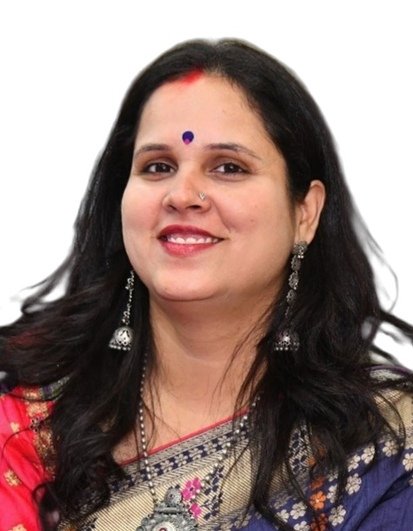
Dr Ayushi Mishra
Barkatullah University Bhopal
Editorial Responsibilities
Ethical duties, peer review governance, and editorial code of conduct
1. Publication Decisions & Editorial Independence
The Editor-in-Chief and Editorial Board are exclusively responsible for deciding which of the submitted articles should be published, guided by the policies of the journal's editorial board and constrained by legal requirements regarding libel, copyright infringement, and plagiarism.
2. Fair Review & Objectivity
Manuscripts are evaluated purely on their scholarly merit and empirical integrity, without regard to the authors' institutional affiliation, race, gender, sexual orientation, religious belief, ethnic origin, or political philosophy.
3. Confidentiality & Conflicts of Interest
Editors and editorial staff must not disclose any information about a submitted manuscript to anyone other than the corresponding author, reviewers, potential reviewers, and the publisher. Unpublished materials must not be used in an editor's own research without express written consent.
4. Vigilance over the Published Record
Editors will take all reasonable steps to identify and prevent the publication of papers where research misconduct has occurred. In the event of confirmed misconduct, appropriate corrections, retractions, or apologies will be promptly published.
Volumes & Issues
Access published archives and full-text collections
No volumes published yet.
Manuscripts submitted now will appear in Volume 1, Issue 1.
Submit First Paper →Recent Published Articles
Peer-reviewed open access papers from current releases
No articles published in current issue.
Accepted articles appear here following copyediting and XML conversion.
Publish with HJPARAM Academic Integrity
All submissions undergo rigorous double-blind peer review, plagiarism screening, CrossMark verification, and permanent digital preservation.